
Lock Stiff Key Hard to Turn? Here’s Why
If you’re wondering why your lock is sticking and your key is hard to turn, remember that it is a typical early warning sign that there is something wrong with the mechanism of your lock…
And, while most people notice it gradually, it can still go wrong, really fast! Once the key starts feeling tight, it will then get harder to turn, and, eventually, you’re standing at your front door wondering why it suddenly won’t move at all.
Think you know the cause? Think again! A stiff door lock can come from a few different places… either dirt inside the lock, a worn key, a misaligned door, or even weather conditions, while sometimes it’s obvious. Often, it isn’t.
But the important thing is this. Don’t ignore it. Resolve it before it gets worse!!!
Remember, if you have a lock that feels stiff, it is already under pressure!!! And, left long enough, it turns into a broken mechanism, a snapped key, or a lock that won’t open at all.
Battersea Locksmith offers fast solutions for any stiff key hard to turn. Don’t hesitate to call anytime, as we are offersing service around the clock:
 CALL 07440317925
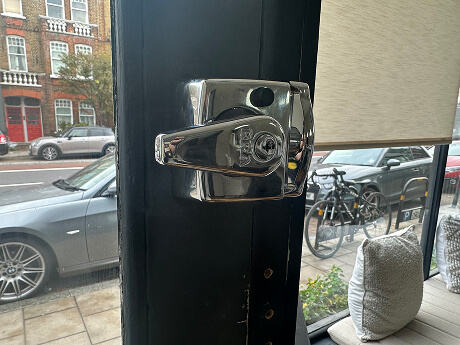
Common Causes of a Stiff Door Lock and Lock Mechanism Issues
Most stiff-lock problems come down to three things: dirt, wear, and alignment. Over time, dirt and debris build up inside the lock cylinder. Dust, grit, and general particles get into the internal lock components. That creates friction, which is why the key starts sticking.
You’ll often feel it as a gritty movement when the key turns.
Wear is another factor. Both the key and the lock components wear down with use. A worn key or poorly cut key won’t sit properly inside the lock. That leads to difficulty turning and uneven pressure on the mechanism.
We also see bent key issues where the key has slightly warped. That stops it from moving smoothly through the pins.
Then there’s alignment.
If the door alignment is off, the locking points don’t line up with the strike plate. That puts pressure on the lock mechanism every time you try to turn the key.
You might notice the key turns fine when the door is open, but it becomes stiff when closed. If you have, then be warned that that’s a clear sign of a misaligned door.
And, in Battersea flats, this is very common for doors to drop slightly over time, especially in high-traffic areas or older properties.
UPVC Door, Mortice Lock and Lock Cylinder Differences
Another important factor to be aware of is that different locks behave differently.
In a uPVC door lock, you have a multipoint system, and that means when the key turns, multiple locking points engage along the door, so, if there’s resistance anywhere along that system, the whole lock feels stiff. A faulty uPVC door lock or worn gearbox can make the handle hard to lift and the key difficult to turn.
Then you have mortice lock systems, often found on wooden doors, which have their own issues; here, often it is dirt, rust, and lack of lubrication inside the lock cylinder that can cause stiffness.
Then, with a composite door, you get a mix of both… a strong door, but still dependent on alignment and internal mechanism condition.
Whatever the door type, the key thing is understanding the lock type, which helps identify whether the issue is internal or external.
Door Alignment and Why a Misaligned Door Causes a Stiff Lock
Alignment is one of the biggest causes of a stiff lock.
If the door has dropped slightly, the lock bolt no longer lines up properly with the strike plate. That creates pressure when you try to turn the key.
You’ll often feel resistance at a specific point in the turn.
A misaligned door can also affect the door frame. Even a small shift changes how the door sits, especially on external doors exposed to weather.
To check this, try the key with the door open.
If it turns smoothly in the open position but becomes stiff when closed, the issue is alignment. Not the lock itself.
Fixing the alignment usually solves the problem straight away.
The Impact of Weather on UK Doors
In the UK, surprise, surprise, weather conditions play a bigger role than most people expect.
In cold weather, the metals inside the lock contract, which, combined with moisture inside the lock, can lead to a frozen lock (we see this a lot when temperatures drop quickly).
Sometimes, keys won’t even insert properly because of ice inside the cylinder. In those cases, gentle warm air is needed. Never force it.
Then, in hot weather, it causes expansion. uPVC door systems expand in heat, which can throw off alignment and make the lock stiff.
Wooden doors react even more. Changes in humidity cause them to swell or shrink, affecting both the door alignment and the lock mechanism.
Heavy rain and damp conditions also contribute. Moisture inside the lock increases friction and leads to stiffness over time.
It’s why lock problems often seem to appear suddenly with seasonal changes.
Safe Fixes: What Works and What Doesn’t
Thankfully, there are a few safe fixes you can try for a faulty door lock yourself at home, that will save you a locksmith call out, and probably a few quid at the same time!
First off, start by cleaning the lock. Use compressed air to blow out dirt from inside the lock. This removes loose debris that may be causing resistance.
Next, be sure to use a proper lubricant. Take our word for it, graphite powder is the best option (it’s a dry lubricant, so it doesn’t attract dirt). You can apply it directly into the keyway or even rub pencil lead on the key as a temporary solution.
Can’t get a hold of that? PTFE-based sprays are also good. They reduce friction and create a protective layer that resists moisture.
But, be sure to avoid oil-based products completely as they attract dirt and create a sticky build-up inside the lock. That makes the problem worse over time.
And, if you have a spare key, try it. If it works smoothly, your original key is likely worn and needs replacing.
We find that these steps solve most early-stage issues.
When Lubrication Won’t Fix the Problem
However, do note that if the lock feels stiff even after cleaning and lubrication, the issue is deeper.
Now, a broken mechanism inside the lock will prevent it from functioning correctly, obviously! If this is the case, you might notice the key won’t turn at all, or it turns but doesn’t engage properly.
No matter how good the lock is, or was, internal components wear out over time; this means that springs weaken, pins wear down, and parts stop aligning correctly.
And, if the lock is stiff even when the door is open, it points to an internal mechanism failure rather than alignment.
Unfortunately, in these cases, lubrication won’t fix it.
If there was ever a situation where trying to force it at this stage is a mistake, it is here!!! Too much force can cause a broken key or even cause the key to snap and break inside the lock (they sound expensive, right!!!).
Signs You Need a Replacement Lock or Professional Help
Now, there are clear signs the lock needs more than a quick fix. But professional locksmiths can quickly identify and fix broken locking mechanisms, even if it isn’t immediately obvious to the untrained eye.
Essentially, if the key won’t turn at all, or if the lock feels completely jammed, it’s time to call a professional locksmith.
Likewise, if the key turns but nothing happens, the internal mechanism may be broken, so call a locksmith… lock mechanisms can fail due to wear and tear, requiring professional assessment and repair.
Also, if you’ve already tried lubrication and the problem keeps coming back, the lock components are likely worn out. You will also find (pretty quickly) that a broken key stuck inside the lock is another issue that requires specialist tools to remove safely without causing further damage.
And, in these cases, you’ll likely need a new lock or replacement parts. Thankfully, professional locksmiths (like us) carry a variety of replacement parts to address different lock issues on-site.
Why You Should Avoid Forcing a Stiff Lock
If you have a stiff lock, and you force it, it might work, but usually this is where most damage happens.
Typically, when a lock feels stiff, people apply too much force, meaning that they push harder, twist the key more aggressively, or try to force the door open. And, to put it simply, the lock just can’t take it!
That’s how keys snap, or the mechanism breaks.
A broken piece inside the lock makes the situation worse. Now the lock can’t be used at all, and you’ll need a locksmith to extract it!! Forcing a lock also damages the internal components, turning a simple repair into a full replacement.
If it’s stiff, stop. Don’t force it.
When to Call a Professional Locksmith
Basically, if, at any point, the issue isn’t improving, it’s time to call a professional.
As a professional locksmith service provider ourselves, we can tell you that a pro can quickly assess whether it’s alignment, wear, or a broken mechanism.
They’ll have (we have) the specialist tools needed to repair or replace the lock without causing further damage.
And, most locksmiths can also troubleshoot over the phone before arriving, helping you understand what’s likely going on. All you need to do is give us an accurate description of your issue, your door setup and anything else you think is relevant (don’t worry, we know what questions to ask).
The most important aspect? If your home security is affected, especially if the lock won’t secure properly, don’t wait.
Call a professional locksmith and get it sorted properly!!!
Our Final Tip: Catch It Early Before It Gets Worse
So, while a stiff lock is one of the easiest problems to fix early, it is one of the most expensive if left too long.
That is why we always suggest regular maintenance, honestly, it really helps!!! And it can be as simple as lubricating locks every 6 to 12 months, keeping dirt out, and checking alignment regularly.
In addition, be sure to use the right key, avoid forcing it, and deal with stiffness early.
It really isn’t rocket science, but that’s how you keep your door lock working properly, avoid further damage, and keep your home secure.
When you’ve caught it, be sure to give us a call to rectify your issue! Battersea Locksmith is here to assist you quickly!